The short version
- Start with the serving size and how many servings are in the package.
- Use the % Daily Value: 5% or less is low, 20% or more is high.
- Look for less saturated fat, sodium and added sugars, and more fiber, vitamin D, calcium, iron and potassium.
1. Serving size and servings per container
Every number on the label is for one serving, so check this first. Since the label was updated in 2016, serving sizes are meant to reflect what people really eat, not what they should eat. Packages that hold two or three servings, like a pint of ice cream, can show a second column for the whole package, because many people finish them in one go.
If you eat two servings, double everything. If you weigh your food, compare your grams with the serving’s grams.
2. Calories
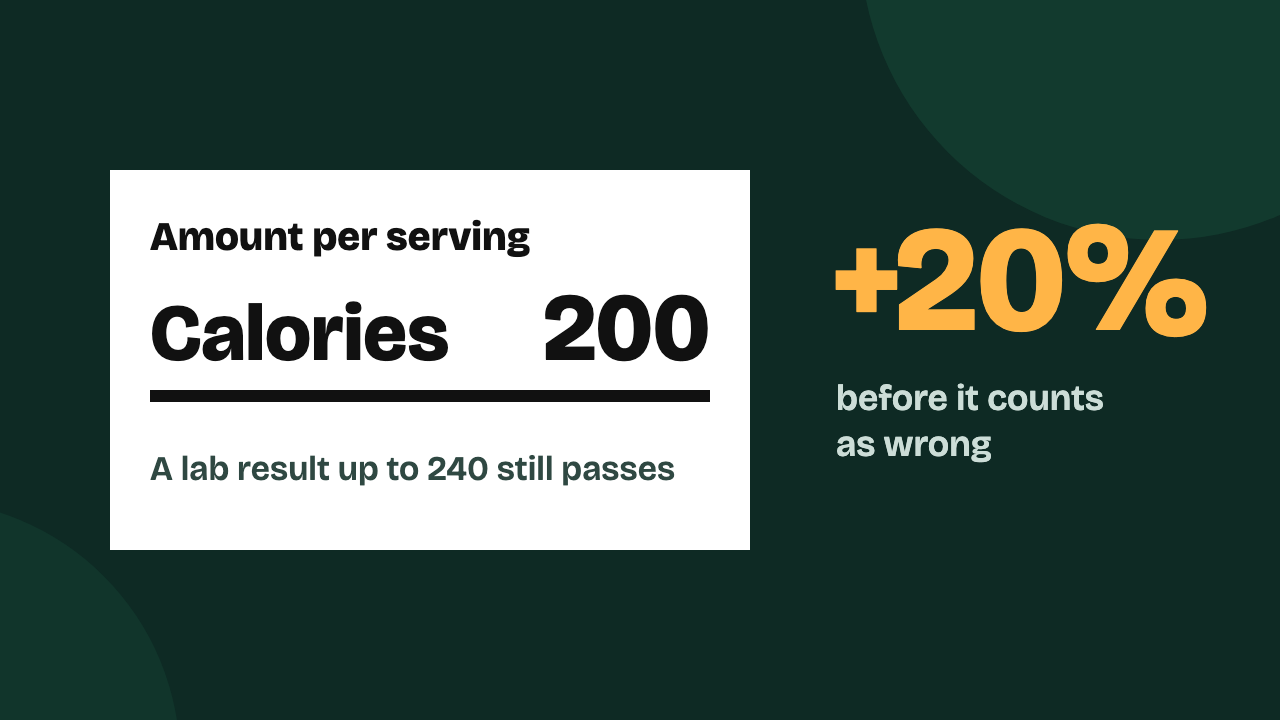
The big number. It tells you how much energy one serving gives you. Whether that’s a lot depends on your daily target: 200 calories is 10% of a 2,000-calorie day but 14% of a 1,450-calorie one.
3. Percent Daily Value
The % Daily Value (%DV) shows how much of a day’s worth of each nutrient one serving gives, based on 2,000 calories a day. The FDA’s rule of thumb: 5% DV or less is low, 20% DV or more is high. You don’t have to do any math. Glance at the column to see what a food is high or low in.
| Nutrient | Daily Value |
|---|---|
| Total fat | 78 g |
| Saturated fat | 20 g |
| Sodium | 2,300 mg |
| Total carbohydrate | 275 g |
| Dietary fiber | 28 g |
| Added sugars | 50 g |
| Protein | 50 g |
4. Nutrients to limit, nutrients to get
Get less of: saturated fat, sodium and added sugars. The Dietary Guidelines for Americans 2025–2030 keep sodium under 2,300 mg a day for anyone 14 or older, and saturated fat under 10% of calories. Added sugars have their own line (“Includes X g Added Sugars”), separate from the sugar naturally in milk or fruit.
Get more of: dietary fiber, vitamin D, calcium, iron and potassium. Many Americans don’t get enough of these, which is why they’re required on the label.
5. Compare and decide
Labels are most useful side by side. Two loaves of bread, two yogurts, two cans of soup: compare the same serving size, then pick the one that fits your day better. For protein, compare protein per calorie, not just grams (our ranking).
A real example
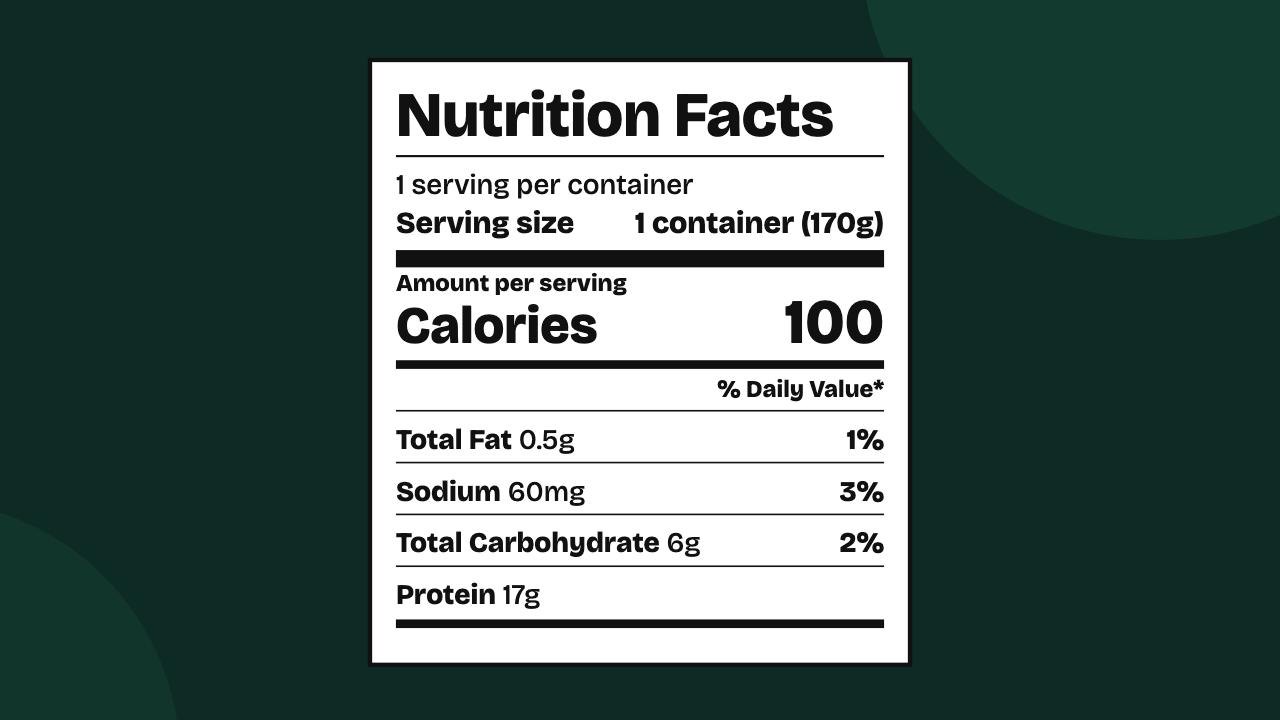
The label at the top of this page shows one container (170 g) of plain nonfat Greek yogurt, with USDA’s values rounded the way labels round them. Unrounded, that’s 100 calories and 17.3 g of protein, with almost no fat and 61 mg of sodium. That’s 35% of the protein Daily Value for 5% of the calories.
In the app
Scan the barcode in Vitametry and the label’s numbers go into your diary. If a product isn’t found, add it once from the label and it’s remembered for next time.
Wondering how close the label is to what’s really in the pack? Here’s what the FDA allows.
Questions
What does % Daily Value mean?
How much of a day’s worth of a nutrient one serving gives, based on 2,000 calories a day. 5% or less is low; 20% or more is high.
What is the Daily Value for sodium?
2,300 mg for adults and children 4 and older.
What is the difference between total sugars and added sugars?
Total sugars include sugar naturally in foods like milk and fruit. Added sugars are sugars and syrups put in during processing, listed on their own line.
Sources
- U.S. Food and Drug Administration. How to Understand and Use the Nutrition Facts Label. www.fda.gov/food/nutrition-facts-label/how-understand-and-use-nutrition-facts-label
- U.S. Food and Drug Administration. Daily Value on the Nutrition and Supplement Facts Labels. www.fda.gov/food/nutrition-facts-label/daily-value-nutrition-and-supplement-facts-labels
- 21 CFR 101.9, Nutrition labeling of food (Electronic Code of Federal Regulations). www.ecfr.gov/current/title-21/chapter-I/subchapter-B/part-101/subpart-A/section-101.9
- U.S. Department of Agriculture and U.S. Department of Health and Human Services. Dietary Guidelines for Americans, 2025–2030 (January 2026). realfood.gov
General nutrition information, not medical advice. If you have a health condition, are pregnant, or have had an eating disorder, talk to your doctor or a registered dietitian before changing how you eat. Food values: 1,021 of Vitametry’s 1,141 foods come from USDA FoodData Central; the rest from other national food tables and product labels.